At Netherhall Mead Academy, our curriculum is pupil centered, ambitious and designed to meet the complex needs of our pupils. It is underpinned by a clear moral purpose: to enable every pupil to thrive, achieve meaningful progress and be as well prepared as possible for life beyond school. We recognise that success for our pupils is holistic and includes progress in communication, independence, emotional wellbeing, physical development and engagement with the wider world.
Our curriculum has been carefully developed through a strong culture of reflective practice, professional enquiry and continual improvement. Staff engage in ongoing professional development, drawing on both in-house expertise and high quality external training. This ensures that teaching is informed by current research and effective SEND practice, equipping staff with a broad and flexible toolkit of approaches that can be adapted to meet individual needs. As a result, our curriculum remains dynamic and responsive, evolving as cohorts change and as our professional understanding of our pupils deepen.
The curriculum intent at Netherhall Mead Academy is closely aligned to pupils’ Education, Health and Care Plan (EHCP) outcomes. Individual needs, strengths and aspirations identified through EHCPs drive curriculum planning, teaching and assessment. Curriculum pathways are designed to ensure that pupils make sustained progress towards their personalised outcomes, with careful consideration given to reducing barriers to learning and promoting independence, self-regulation and communication. While EHCP outcomes provide a critical framework for curriculum planning, they do not limit or define the full scope of our curriculum ambition for pupils.
Curriculum Frameworks: Each of our learning areas is underpinned by a clear curriculum framework. These frameworks set out the essential knowledge, skills and experiences pupils are expected to develop over time and support teachers to plan purposeful learning. They are designed to ensure that learning is appropriately ambitious and carefully matched to each pupil’s stage of development, enabling progress from individual starting points and promoting long-term learning.
The curriculum is divided into key learning areas:
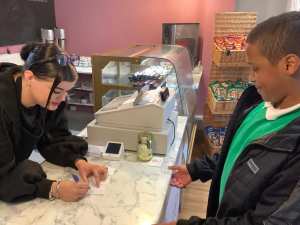 Communication overarches everything at Netherhall Mead Academy. We are a ‘total communication school’. Effective communication strategies and teaching allow our pupils to express their needs and wants, supports them in being independent and making real informed choices and allows them to interact with the world around us.
Pupils have access to a wide range of strategies and personalised communication programmes. These include ‘Sign along’, symbol supported text, photographs, objects of reference, switches, communication books and passports. For further information on our ‘total communication’ approach, please click here.
We have a Communication Lead who supports in the implementation and quality assurance of communication across the school.
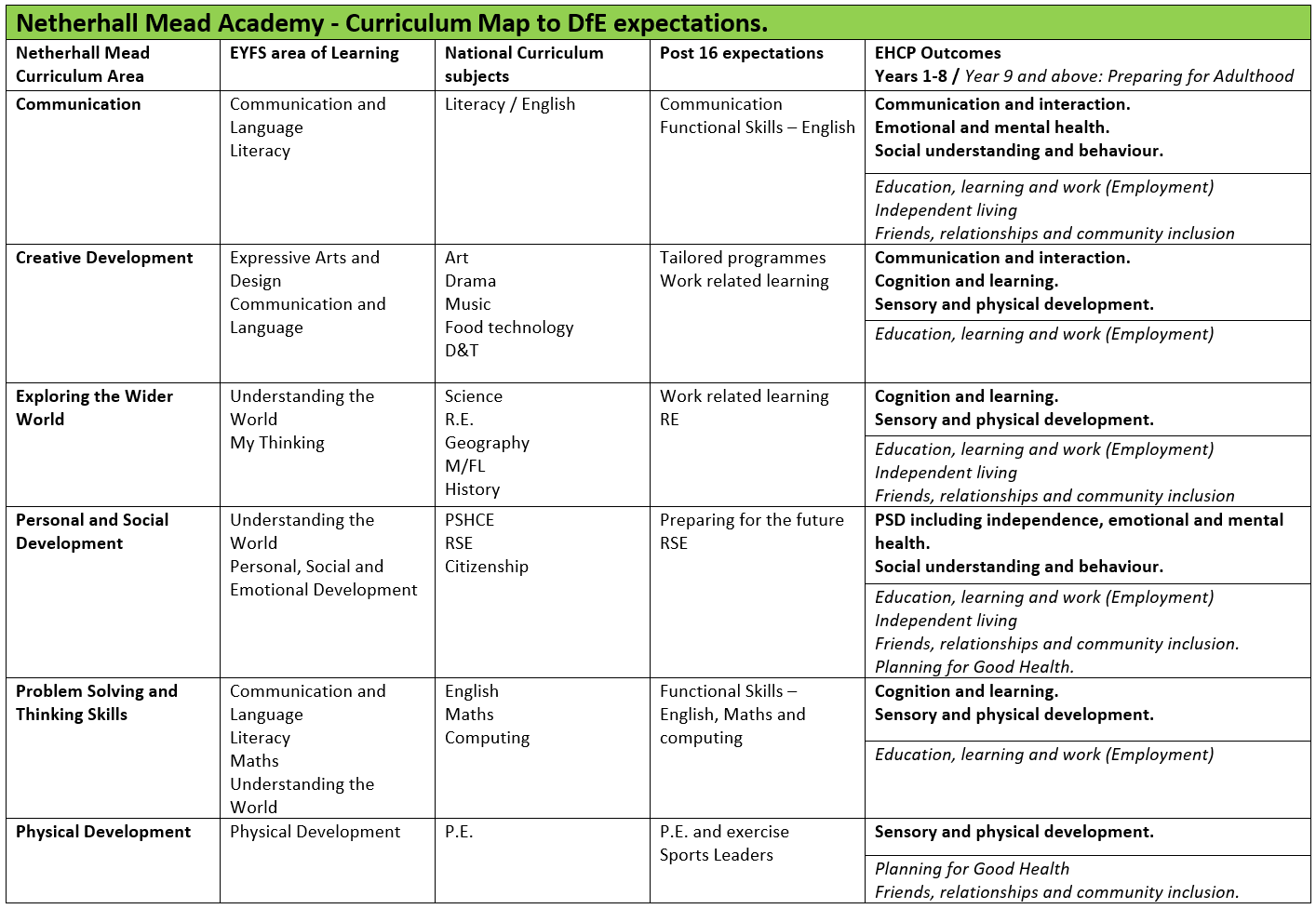
Our curriculum is broad, balanced and carefully adapted to meet the needs of our pupils. Our curriculum explicitly maps to EYFS areas of learning and National Curriculum subjects ensuring continuity, ambition and progression at every stage.
We have a strong ethos of respect for all pupils, staff and families. We are committed to making our school a place where everyone is positively supported to become the best that they can be. This is very evident in the calm and caring atmosphere within the school and the positive relationships between all members of the school community.
At all times, we seek to maximise access to learning opportunities for every pupil. We support behaviour in order to promote learning.
Central to this are Positive Behaviour Support (PBS) systems and our belief that behaviour is communication- it is our responsibility to find out what is being communicated and how we can best support.
The clues to successful PBS are to be found in the pupil themselves. We adopt a personalised approach through knowledge of pupils’ needs. This includes:
- Condition/medical diagnosis
- Contextual and personal history
- Triggers and vulnerabilities
- Motivators
- Co and self-regulating strategies
- Total communication support
- And for some pupils a Risk Reduction Plan
It is better to predict and plan than to find and fix.
Our partnership with families is a crucial part of successful behaviour support for all our pupils- we have so much to learn from each other. We value day-to-day communication through class home/school books, emails, telephone calls and face to face conversations. We offer a support network of support through family PBS groups and workshops. We are working to develop an active network for families to offer support and grow friendships. We believe the relationship we have with families is the foundation for successful PBS and that this in turn shapes the building blocks of adulthood and life beyond school.
POST 19 Leavers’ Destinations over time:
The following list details the destinations of Netherhall Mead Academy (Previously Nether Hall school) leavers over the period 2015-16 to 2023-2024 (9 years).
Previously we had two leavers that were NEET. Both leavers continue to receive support from the Adult Social Care transitions team. One leaver remains at home due to health reasons. Another leaver requires a specialist college, but no spaces were available. In September 2024 we have one student NEET due to transport issues accessing college.
Many of our leavers are provided with local FE provision. When local FE provision is unable to meet need, students may apply to local specialist colleges. Most FE provision continues to develop independent living skills.
For some of our leaver’s FE is not the most suitable option. These students have Social Care provision instead unless families decide otherwise. .
| Netherhall Mead Post 19 leavers 2015-16 to 2023-2024 | |||
| Total PMLD leavers 15. Total SLD leavers 47 | |||
| Leavers’ Destinations | No. | Course level | Course / offer |
| Leicester College PMLD | 16 | None | RARPA PMLD |
| Leicester College SLD
(Freemans Campus) |
21
|
None | RARPA Learning for living |
| Leicester College SLD (Abbey Campus) | 8 | None | Transition to work
|
| Gateway College | 9 | Entry 2 / 3 | PSD / Work ready |
| Sense College, Loughborough | 7 | None | Continuing studies |
| Homefield College SLD | 6 | None | Enterprise |
| Homefield College – Sensory pathway | 1 | None | Sensory |
| Other | 1 | None | |
| Social care option | 3 | None | |
| Accommodated – Post 19 | 5 | N/A | |
Test, exam and assessment results:
No formally accredited courses were offered at Nether Hall school in 2023/2024.
Please refer to our curriculum by clicking here
For information regarding our careers programme, click here.
Safeguarding Through the Curriculum at Netherhall Mead Academy
At Netherhall Mead Academy, safeguarding is not taught as a standalone concept; it is woven deliberately and meaningfully through every aspect of the curriculum and school culture. Pupils are at the heart of all safeguarding practice, with the curriculum designed to support children to be safe, confident, communicative, and prepared for life beyond school, in line with the academy’s intent that everybody can shine.
A Personalised and Inclusive Safeguarding Curriculum
Netherhall Mead Academy delivers a highly personalised curriculum that responds to pupils’ individual needs, experiences, and vulnerabilities. Safeguarding education is adapted carefully to reflect pupils’ cognitive, communication, emotional and physical needs, recognising that many pupils are vulnerable due to SEND, medical needs, or past experiences of adversity.
The curriculum is intentionally flexible so that safeguarding themes such as safe relationships, self‑advocacy, personal boundaries, and emotional regulation can be revisited and reinforced in developmentally appropriate ways, using repetition, modelling, and practical learning opportunities.
Safeguarding Embedded Across Curriculum Areas
Safeguarding learning is embedded across multiple curriculum strands, ensuring consistency and reinforcement:
PSHE and RSHE
Personal, Social, Health and Economic education (PSHE), alongside Relationships and Sex Education (RSE/RSHE), plays a central role in safeguarding delivery. Lessons are adapted to be accessible, concrete and experiential, enabling pupils to:
- Recognise safe and unsafe situations
- Understand trusted adults and how to seek help
- Develop awareness of consent, privacy and body autonomy
- Explore healthy relationships and respectful interactions
In line with KCSIE 2025, the PSHE curriculum explicitly addresses emerging online risks, including:
- Misinformation and disinformation
- Conspiracy theories
- The use of generative AI, including risks associated with nudifying apps and AI‑generated relationships (e.g. “AI girlfriends”), taught where developmentally and age‑appropriate
Content is carefully scaffolded and tailored so that pupils receive protective knowledge without causing fear, with a strong emphasis on reassurance, recognition, and support.
Computing and Online Safety
Online safety education is fully integrated into Computing and Problem Solving & Thinking Skills, supporting pupils to navigate digital spaces safely. Teachers plan lessons using the Sheffield SEND Computing Scheme of work. Aspects of this scheme focuses on:
- Safe use of technology and devices
- Understanding online boundaries
- Recognising unsafe or confusing online content
- Knowing what to do and who to tell if something feels wrong
This is particularly important for pupils with SEND who may be more trusting, literal, or vulnerable online. Teaching is practical, visual and repeated, using scenarios, symbols, and real‑life contexts.
Personal & Social Development
Safeguarding is reinforced through the school’s strong focus on Personal & Social Development, which are key learning areas within the curriculum. Pupils are supported to:
- Build self‑esteem and emotional understanding
- Develop empathy and respect for others
- Learn problem‑solving and coping strategies
- Practise independence and decision‑making in safe environments
These areas contribute directly to safeguarding by empowering pupils to express needs, recognise emotions, and develop resilience.
Total Communication Approach and Safeguarding
Communication underpins safeguarding at Netherhall Mead Academy. As a total communication school, pupils are given access to a wide range of communication methods including signs, symbols, photographs, objects of reference, switches, and communication passports to ensure they can express concerns, make choices, and seek support.
This approach is central to protecting pupils who may otherwise struggle to disclose worries or understand risk. Staff are trained to recognise non‑verbal indicators of concern and to respond consistently and sensitively.
Working with Families and Other Agencies
Safeguarding at Netherhall Mead Academy is underpinned by a strong culture of partnership. Staff work closely with families and other agencies, recognising that safeguarding is most effective when school, home and professionals work together.
Teachers are clear about intended outcomes for individual pupils and use curriculum learning areas flexibly to deliver safeguarding messages in ways that are meaningful and relevant. Ongoing professional development ensures staff remain informed about emerging risks and best practice.
Through a personalised, compassionate and highly adapted curriculum, Netherhall Mead Academy ensures safeguarding is lived and experienced daily supporting pupils not only to stay safe, but to thrive and achieve their potential.
Examples of Netherhall Curriculum Frameworks – Safeguarding
Below, are some examples of how we integrate Safeguarding within the Curriculum at Netherhall Mead Academy. These frameworks have been written by our wider leaders.
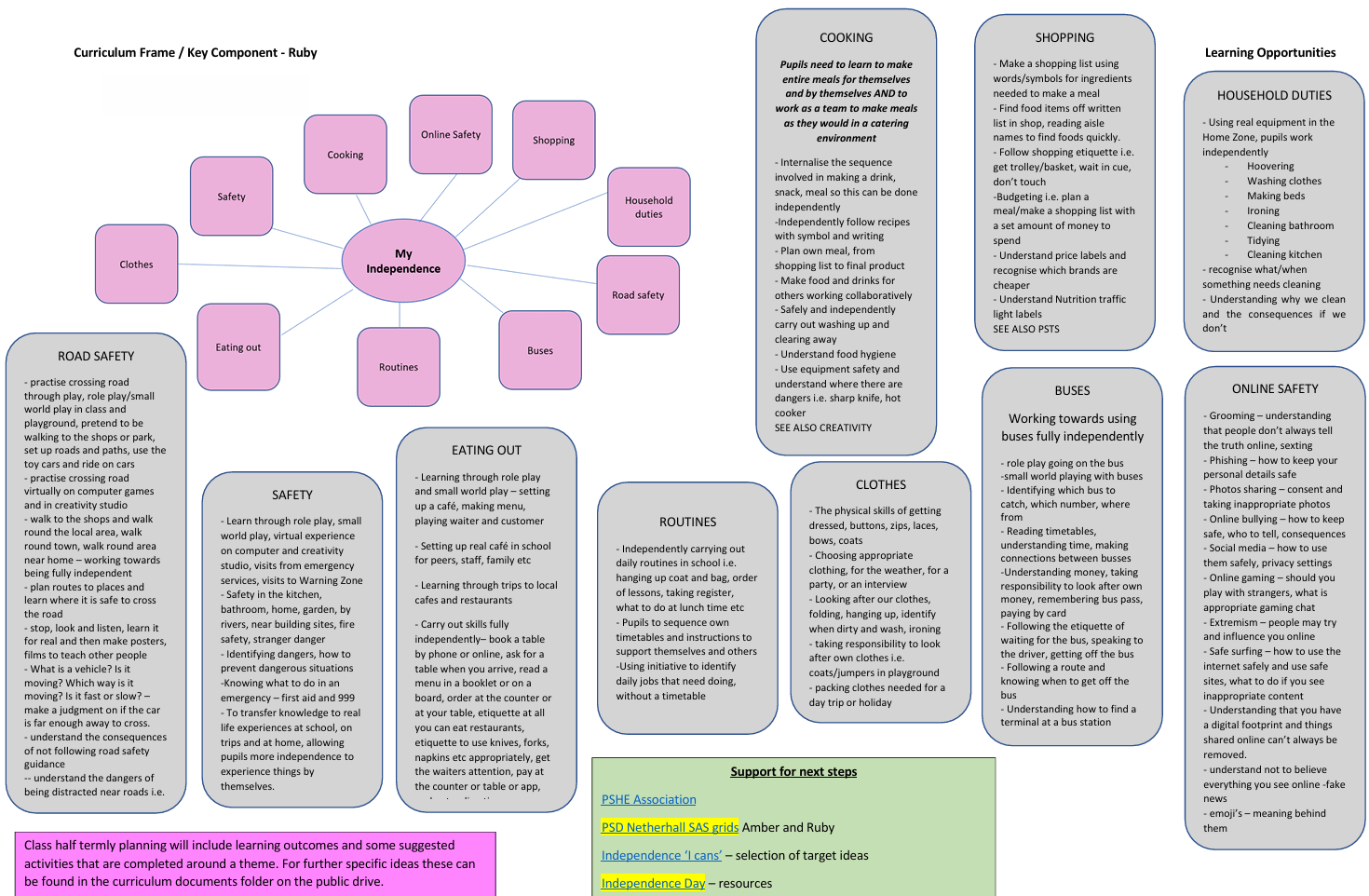
Example 1 – As part of Personal Social Development; ‘My Independence’, pupils along the Ruby Pathways learn about keeping themselves safe; road safety and online safety.
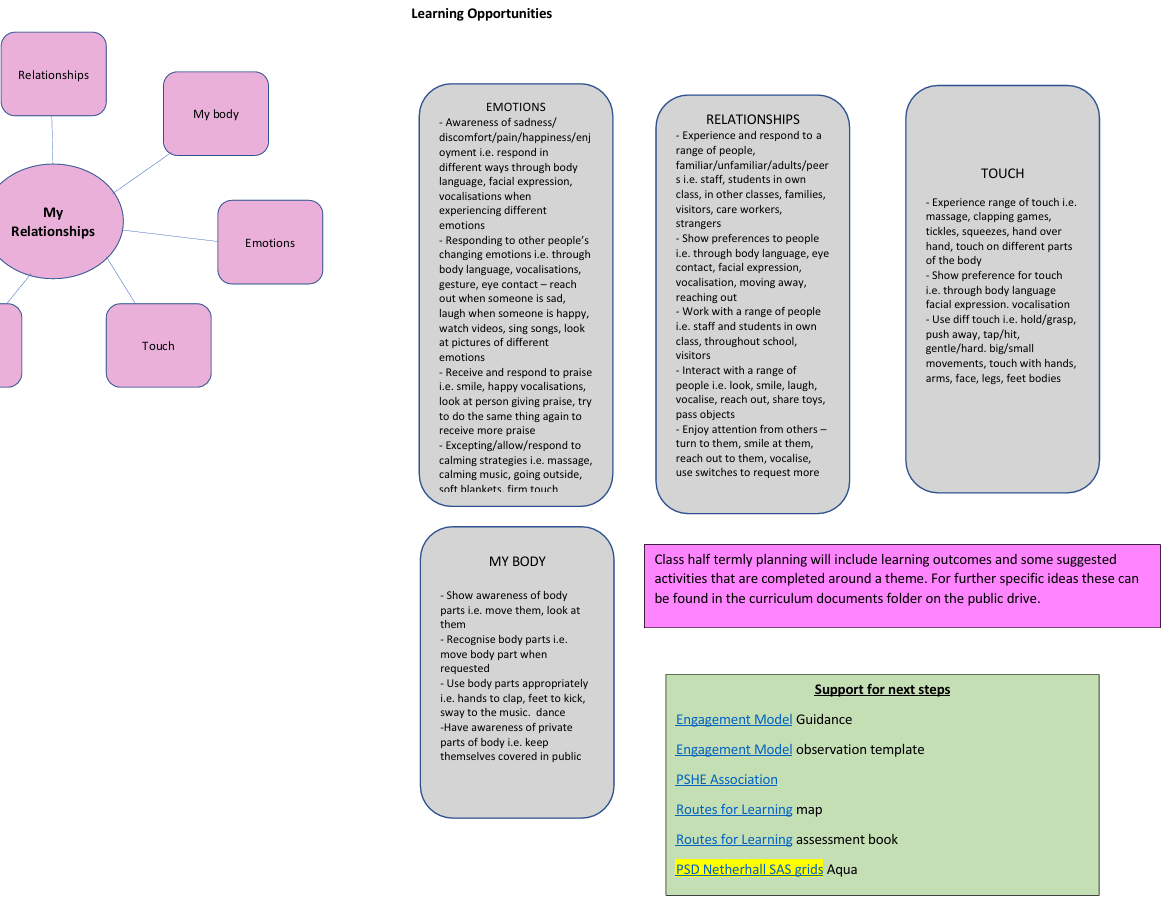
Example 2 – As part of the Personal Social Development; ‘My Relationships’, pupils along the Aqua Pathway learn about their bodies and are encouraged to show awareness of their own bodies.

If you would like any further information on our curriculum offer, please contact one of our Assistant Principals.
 A Place to Shine